Iron Chlorosis

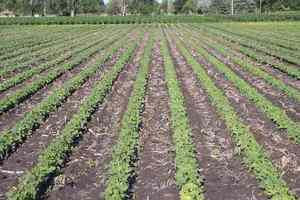
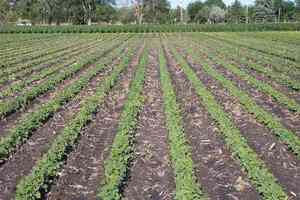
Soil Solutions, LLC has cooperated on several research projects using PRO CAL 40 to offset the soil conditions that cause iron chlorosis in soybeans. We have seen visual differences where we have applied PRO CAL 40 usually using rates of one or two tons per acre. Below are some pictures of plots where we successfully reduced the amount of yellowing of the soybeans.
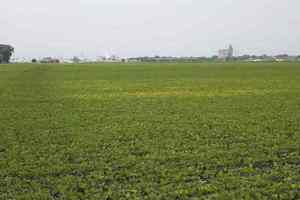
In the picture above the yellow soybeans were untreated. The green plants in front of the yellow strip had 1 ton/acre PRO CAL 40 applied. Yield responses in this field averaged 3 to 4 bushels better with the PRO CAL 40. Yields were in the 65-70 bushel range this year.

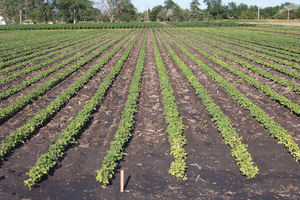
Below are pictures from another plot we had with Monsanto to compare the effects of PRO CAL 40 on iron chlorosis. These are small plots.

This picture above to the right of the stake is of the untreated plot. Below is the plot that received .75 ton/acre.

Below is a picture of the plot that received 1.5 tons of PRO CAL 40. You can see that both treatments have soybean plants that are darker green and the leaves were larger also.

We have also worked with Monsanto one year to determine the differences in response among soybean varieties. One year’s results do indicate that there is differences among varieties. Yields are shown below of several varieties. It is obvious from the pictures and from the yields that the iron chlorosis in these plots were not too severe.

Variety Treated Check
AG2403 68.6 61.02
DKB25-51 70.78 63.63
AG2703 69.08 67.48
AG2801 59.63 47.56
DKB29-51 58.48 56.00
AG3005 53.90 54.34
AG 3305 58.18 60.37
AG3401 3.69 62.94

The benefits of PRO CAL 40 in decreasing Platte Valley Yellows or iron chlorosis appear to last only one year. Although we saw yield benefits the second year in the corn (6-15 bushels better) we did not see visual differences when we rotated back to soybeans in the third year.

The data below is from research that was done by Dr. Wiese, etal. while he was at the University of Nebraska. He used granulized gypsum at lower rates in the row and saw similar responses as we experienced.

1982 Soybeans

Treatment Rate, Method Yield, BU/A
Check 0, In Band to Side of Row 25
Gypsum 450#, In Band to Side of Row 44

*Band was 3 inches deep and 1 1/2 inches to side of row.

1983 Soybeans

Treatment Rate, Method Yield, BU/A
Check 0, In Row at Planting 19
Gypsum 75, In Row at Planting 30

More recent research has revealed that bicarbonate has a direct role in inducing iron deficiency. Bicarbonates are produced in high pH soils especially under more moist conditions. Gypsum (CaSO4 2H2O) has shown to react with bicarbonate (HCO3) to form CaCO3 or lime decreasing the amount of bicarbonate that affects iron uptake and iron availability.